


Jim, my neighbour, recently spent $48,000 finishing his basement.
When tax season arrived, he asked me something I hear from clients every year.
“Can I claim this on my taxes?”

As a renovation contractor, I understand why people ask. A major renovation feels like an investment, and everyone hopes to recover some of that cost.
But under the Canada Revenue Agency (CRA), most home upgrades, including basement renovations, do not qualify for tax deductions.
There are exceptions, though.
Suppose your renovation serves a broader social purpose, such as improving accessibility, supporting a disabled family member, or creating a secondary suite for aging parents.
In that case, the CRA offers tax credits to help.
Let’s go through what qualifies, what doesn’t, and how you can plan your project to make the most of the available tax benefits.
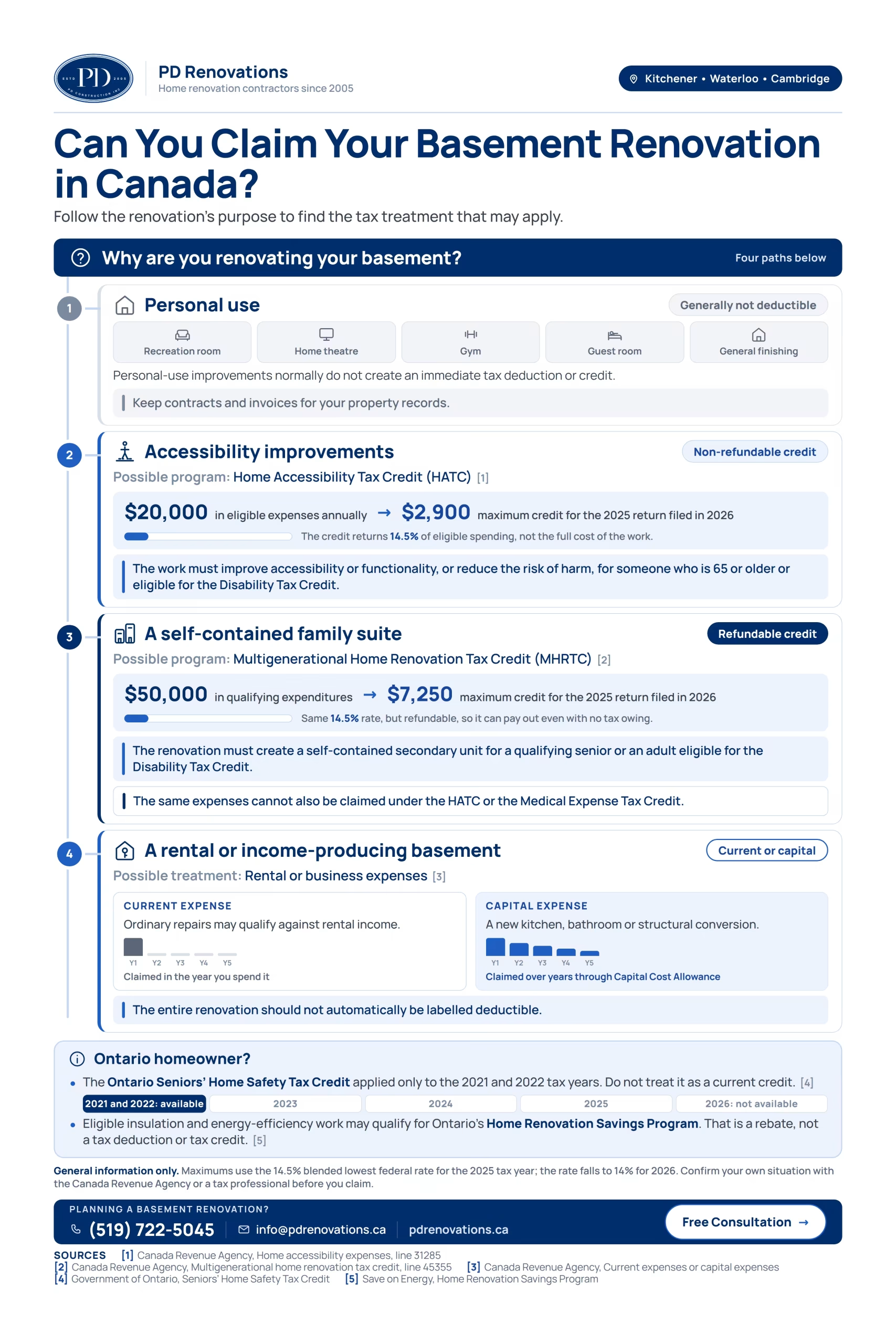
What "Tax Deductible" Really Means in Canada?
Before getting into which renovations qualify, it’s important to understand what tax-deductible means.
Many Canadians confuse deductions and credits, but they affect your taxes in very different ways.
Term | What It Does | Example |
|---|---|---|
Tax Deduction | Reduces the income you are taxed on | If you earn $80,000 and have $6,000 in deductions, you are taxed on $74,000 |
Tax Credit | Reduces the amount of tax you owe directly | If you owe $4,000 in taxes and have a $1,000 credit, you pay $3,000 |
Most Canadian renovation programs use credits, not deductions.
Credits have a stronger impact because they reduce your tax bill dollar for dollar, not just your taxable income.
When Basement Renovations Are Not Tax Deductible?
This is the most common situation. The CRA considers upgrades made for personal comfort or appearance as personal expenses, not deductible business or medical expenses.
Typical non-eligible renovations include:
Renovation Type | Example | Tax Eligibility |
Aesthetic upgrades | New flooring, paint, or ceiling lights | Not deductible |
Lifestyle improvements | Building a home theatre or gym | Not deductible |
Maintenance or repairs | Replacing drywall, fixing leaks | Not deductible |
General finishing | Framing, insulation, or adding storage | Not deductible |
These expenses can still increase your home’s resale value, but will not reduce your taxes for the year they are completed.
"The CRA does not issue tax refunds for improving the appearance or comfort of your home."
Reference : Government of Canada
When Basement Renovations Can Be Tax Deductible?
There are three main situations where basement renovation expenses may qualify for tax credits or long-term financial benefits.
1. Accessibility Renovations
Accessibility upgrades help seniors or disabled individuals live safely and independently. When these improvements are medically necessary, they can qualify under the Home Accessibility Tax Credit (HATC).
Examples of eligible accessibility expenses:
- Installing wheelchair ramps
- Adding grab bars or stair lifts
- Creating an accessible bathroom in the basement
- Widening doorways or hallways
These tax breaks can cover improving energy efficiency or making homes more accessible to the elderly or those with disabilities."
— National Bank of Canada
To claim this, the renovation must:
- Be permanent and part of your home structure
- Improve mobility or accessibility for a qualifying individual.
- Have receipts and documentation proving the medical or accessibility purpose.
The maximum annual credit under the HATC is $20,000 for eligible expenses, offering a 15% credit that can save up to $3,000 on taxes.
If you’re planning a remodel for functionality or comfort, explore our basement renovation services in Kitchener-Waterloo to see design options that add value even without tax credits.
2. Multigenerational Home Renovation Tax Credit (MHRTC)
The Multigenerational Home Renovation Tax Credit is a major federal program launched to help families create secondary suites for senior or disabled relatives.
If you’re turning your basement into a self-contained living unit for a parent, grandparent, or qualifying adult child, you could be eligible.
MHRTC Item | Value |
Maximum eligible renovation cost | $50,000 |
Credit rate | 15% of eligible expenses |
Maximum tax refund | $7,500 |
"The Multigenerational Home Renovation Tax Credit is a refundable tax credit available on up to $50,000 of eligible expenses incurred after 2022 at a rate of 15%."
— Canada Revenue Agency
To qualify:
- The basement must be converted into a complete living area with its own entrance, kitchen, bathroom, and sleeping space.
- The relative must move in and live there full-time.
- You must keep all receipts, contracts, permits, and proof of occupancy for CRA verification.
To learn more about adding a secondary suite that qualifies for the Multigenerational Home Renovation Tax Credit, visit our legal basement apartment costs in Waterloo Region guide.
3. Rental Property Renovations
If you use your basement as a rental unit, your renovation costs may qualify as rental property expenses. The CRA treats these differently depending on the type of work.
Expense Type | Description | Tax Treatment |
Current Expenses | Repairs, painting, or replacing broken fixtures | Fully deductible in the same tax year |
Capital Improvements | Building a kitchen, adding a bathroom, or major structural work | Must be depreciated over several years |
Operating Costs | Insurance, property taxes, advertising, management fees | Deductible annually |
"In Canada, basement renovations for rental purposes can be claimed as capital expenses or repairs depending on the work."
— JustAnswer Canada
Capital improvements are deducted gradually through Capital Cost Allowance (CCA), usually at 4% per year for residential rental buildings.
Keep detailed records to distinguish between short-term repairs and long-term improvements.
Eligibility Requirements for the MHRTC
The MHRTC has specific criteria, and missing one can disqualify your claim. Here’s a quick summary.
Who Qualifies
- Parents or grandparents aged 65 and above
- Adult children or grandchildren 18 and older with disabilities are eligible for the Disability Tax Credit.
- Other relatives meeting CRA’s relationship definitions
What the Basement Must Include
- Separate entrance from the main home
- Full kitchen with cooking facilities
- Private bathroom and sleeping area
- Living space suitable for permanent residence
Required Proof
- Receipts, contracts, and inspection records
- Proof that the qualifying relative lives full-time in the new suite
- Photos or floor plans can help if audited.
The MHRTC does not apply if the unit is built for rental income or temporary guests. It must serve a family member in need of housing support.
Provincial and Local Tax Credits (2025)
In addition to federal programs, many provinces offer their own home renovation credits for accessibility, senior safety, or energy efficiency. These can apply to basement renovations that meet specific conditions.
Ontario
- Seniors’ Home Safety Tax Credit: Refundable 25% credit on up to $10,000 in eligible expenses, saving up to $2,500 per year.
- Applies to renovations that improve safety or accessibility, such as grab bars or stair lifts in basement spaces.
– Government of Ontario
British Columbia
- BC’s general Home Renovation Tax Credit for seniors was discontinued, but residents can access the BC Rebate for Accessible Home Adaptations (BC RAHA).
- Offers up to $20,000 per home for accessibility improvements like widened doorways, accessible bathrooms, or ramps.
– BC Housing
Manitoba
- Manitoba Home Accessibility Tax Credit covers up to $10,000 of eligible expenses for seniors or family members with disabilities.
- It applies to basement modifications that improve mobility, such as walk-in showers or stair lifts.
– Province of Manitoba
Saskatchewan
- The Energy Efficiency Rebate Program supports upgrades that reduce utility costs, including basement insulation and HVAC improvements.
- These programs change often, so homeowners should verify current availability through the SaskEnergy or Efficiency Saskatchewan websites.
Alberta
- While Alberta has no direct renovation tax credit, homeowners can access energy retrofit grants for improving insulation, HVAC systems, or windows in basements.
- Programs are managed by Efficiency Alberta and municipal initiatives like the City of Edmonton’s Home Energy Retrofit Accelerator.
Quebec
- The RenoClimat Program provides financial assistance for improving energy performance, which may apply to basement insulation or air sealing projects.
- Not a tax credit, but a direct rebate on completed energy-saving work.
– RenoClimat Quebec
Each province has unique eligibility requirements, spending limits, and claim procedures.
Always check the latest information from your provincial revenue or housing department before filing.
How to Keep Records for CRA Audits?
The CRA regularly audits renovation-related tax credit claims. If you claim any federal or provincial program, you must maintain complete documentation.
Keep the Following:
- Receipts and invoices for all materials and labour
- Contracts signed with licensed contractors
- Building permits and inspection reports
- Proof of residency for qualifying relatives (utility bills, lease agreements)
Before-and-after photos to show the scope of work
"The CRA audits these claims and requires receipts, contracts, and proof that the qualifying relative moved in."
— Government of Canada
Digital backups are acceptable, but store originals safely for at least six years after filing your return.
How to Maximize Your Tax Benefits?
You cannot control every rule, but you can plan smarter to ensure your renovation gives you the maximum possible return.
1. Plan Timing Around the Tax Year
If your renovation spans multiple months, consider splitting eligible work between tax years.
This can help you qualify for credits in consecutive years if a program has annual spending limits.
2. Consult Tax Professionals Early
A qualified accountant or financial planner can verify eligibility and ensure you do not miss credits like the MHRTC or HATC.
Their fees are often offset by the savings they identify.
3. Choose Eligible Features
If you’re renovating for family use, think long-term.
Adding accessibility elements, proper insulation, or a legal suite layout may cost more upfront but can unlock credits and boost resale value.
4. Keep Provincial and Federal Programs in Sync
Some programs allow you to stack credits.
For example, an Ontario homeowner can claim the federal MHRTC and the provincial Seniors’ Home Safety Tax Credit on the same project if all requirements are met.
5. Avoid Mixing Personal and Rental Work
If your basement is both a family and rental space, separate the expenses clearly. Keep invoices divided by room or function to prevent confusion during a CRA review.
Final Thoughts
For most Canadians, basement renovations are not tax-deductible.
The CRA treats them as personal improvements that enhance comfort or resale value, not expenses that reduce your tax bill.
However, projects that serve a larger purpose, such as supporting aging relatives, improving accessibility, or creating long-term rental housing, can qualify for meaningful credits through the Multigenerational Home Renovation Tax Credit, Home Accessibility Tax Credit, or provincial programs.
Before starting your basement renovation, talk to a qualified tax advisor and confirm which programs apply to you.
The right plan can save thousands, but only if you meet the exact criteria.
Your renovation should improve how you live today and help your family tomorrow.
Let’s design a project that pays you back.
You can also compare basement renovation costs across Waterloo Region to plan your project more effectively before the next tax season.