


It seems like a small detail until mail starts going to the wrong door.
For a property owner renting out a new unit or housing a family in an accessory dwelling unit, shared mail can create daily problems quickly.
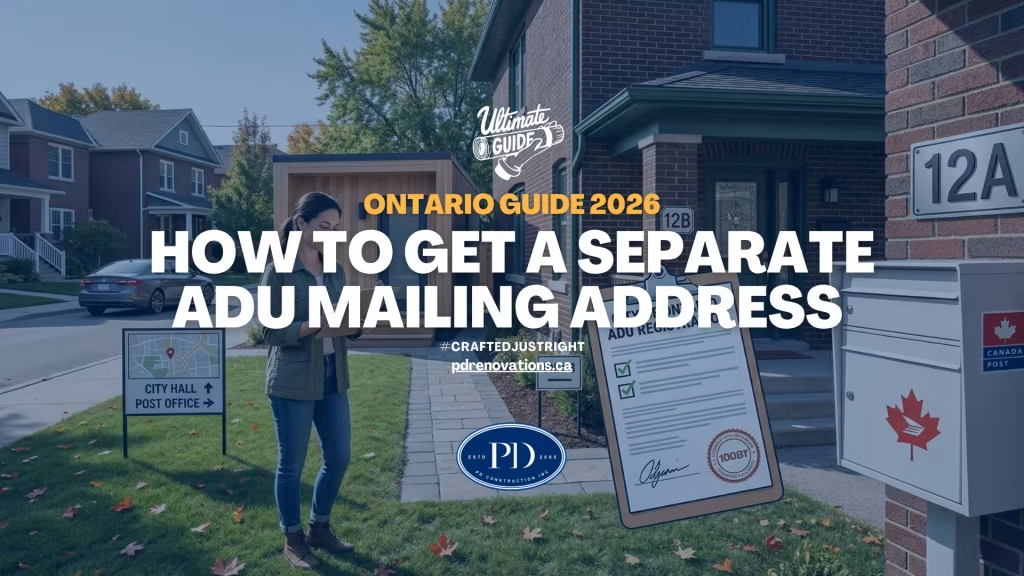
Why Your Second Unit Needs Its Own Identity
It compromises privacy, leads to delivery errors, and makes the space feel less independent.
A separate mailing address gives your additional dwelling unit a clear identity. It helps with utility setup, supports emergency response, and makes the unit function more like a real home.
This guide explains how to get it in Ontario, from legal approval to municipal records and Canada Post registration.
Step 1: The Provincial Foundation: Is Your Unit Legal?
Before any city assigns a new address, your unit must legally exist. That means compliance with the Ontario Building Code and local zoning by-laws.
“To add a second unit in your house, you will need a building permit.”
- Reference:
Ontario government
If the unit isn’t legal, the address request stops here.
Bill 23 and Additional Residential Units
Ontario changed the rules in 2022 through Bill 23, effectively ending exclusive single-family zoning.
Most residential lots connected to municipal water and sewer can now have up to three units: the main house, a secondary suite, and a third detached unit in a separate building, such as a garden or laneway suite.
“The proposed changes would allow, ‘as-of-right’ (without the need to apply for a rezoning) up to 3 units per lot in many existing residential areas.”
- Reference: Ontario Environmental Registry of Ontario
Cities can no longer ban these units outright. The Ontario Planning Act now mandates that municipalities allow additional dwelling units in their official plans and zoning regulations.
Important detail: Address suffixes like 123-B or unit numbers only apply to registered units. No building permit, no address designation.
The Separate Entrance Rule
Most Ontario municipalities require a dedicated exterior entrance with no access through the main dwelling. A side door or rear entrance usually qualifies. An interior-only entrance typically does not.
This rule exists for safety standards, fire separation, and emergency services access. Paramedics and firefighters need to know exactly where to go.
Step 2: The Municipal Level, Requesting Your New Civic Address
The city assigns the address. This is where the unit gets officially named and recognized in municipal records.
The Building Permit Trigger
In cities like Kitchener, Waterloo, and Niagara Falls, the addressing process often starts automatically when you apply for an ADU building permit.
Addressing staff get notified, and a new civic designation gets created during permit approval.
In some cities, you must request it separately. Always confirm with your building department.
Suffixes vs. Unit Numbers
Cities use two common systems to identify multiple units on a single property.
Suffix system:
Main house stays 123 or becomes 123-A
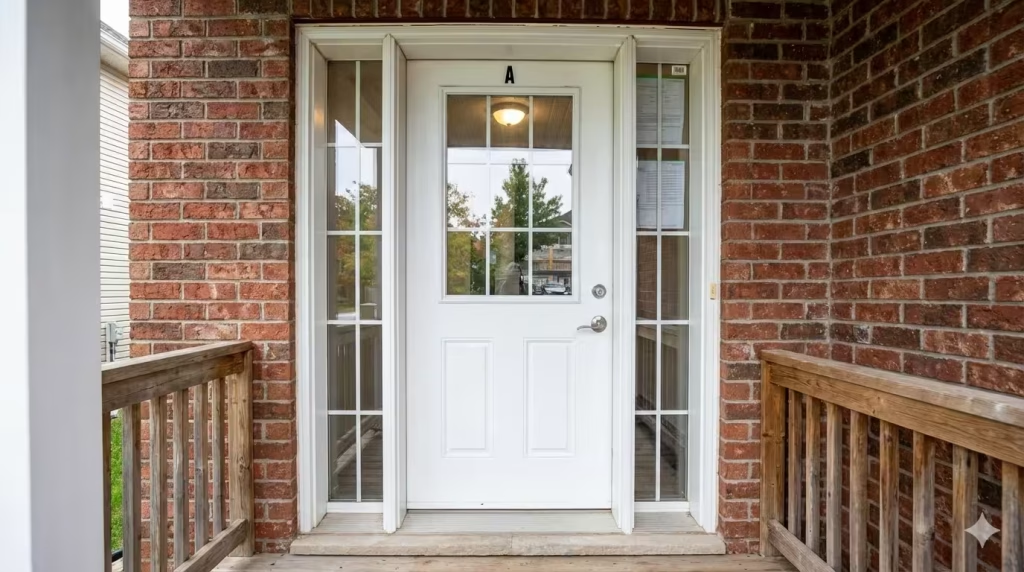
ADU becomes 123-B
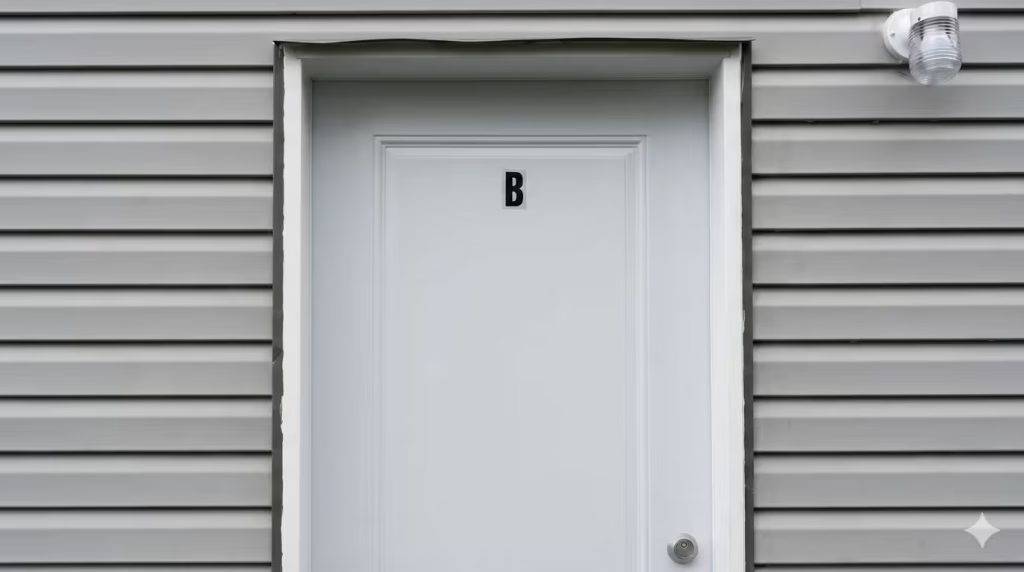
Unit system:
123 Unit 1
123 Unit 2
Waterloo and the surrounding region commonly use suffixes, while cities like Niagara Falls assign numeric identifiers.
Toronto often uses unit numbers, particularly for laneway and garden suites, sometimes called granny flats.
Ask your planning division which system they use before submitting your application form.
Fees and Municipal Updates
Most cities charge a small fee, typically ranging from $100 to $300. That fee covers municipal database updates, 911 and emergency services notification, and mapping system updates.
This step matters more than people think. Without proper registration, emergency responders won’t know your detached ADU exists.
Step 3: The Federal Step, Registering with Canada Post
Cities assign addresses. Mail delivery is handled separately; that job belongs to Canada Post, the Postal Service responsible for all residential property deliveries in Canada.
Verifying the Address in the Database
Once the city approves your address, wait a few business days, then check the Canada Post Address Lookup tool to confirm the suffix or unit number appears correctly.
If you have added a suite to an existing address and want mail delivered to that specific suite, please contact your city or town to register the address.
Reference : Canada Post support page.
If it doesn’t show up, the mail won’t arrive. This is where many homeowners encounter unexpected delays.
Mailbox Requirements and Placement
Canada Post has strict mail delivery rules.
For most ADUs, including basement apartments, mailboxes must be grouped together at the front property line or main entrance.
Both the primary home and ADU boxes stay at the front.
Letter carriers will not walk to a backyard unit or separate entrance at the rear.
Side doors and rear doors do not qualify for mail delivery unless specifically approved.
Your letter carrier delivers to the mailbox location, not the actual dwelling door.
Label clearly:
123-A
123-B
Or Unit 1, Unit 2
Poor labelling causes delays, mail delivery failures, and returned packages.
Getting Your Own Mailbox Key
For legal suits, tenants are entitled to their own mailbox key. If you only received one key for the address, call Canada Post at 1-844-454-3009 and explain that only one key was issued.
Canada Post will send an internal message to the local conversion team regarding the new mailbox request.
Write down the reference number provided. If you don’t hear back within the timeframe they describe, follow up.
Why This Matters: Utilities, Privacy, and Safety
A separate address changes how the unit functions day to day.
Independent Utility Metering
Many utility companies and utility providers require a unique municipal address before they’ll set up separate utility services. Electricity, water meter connections, and natural gas setups often depend on it.
Without a separate address, separate meters may get denied, and utility bills stay tied to the existing building. This creates complications with utility costs and makes it harder to fairly charge rental income.
Tenant Rights and Privacy
A separate address allows tenants to set up internet accounts, register insurance, update their government ID at the post office, and receive personal mail without landlord involvement.
This matters for long-term tenants. Having their own address makes them feel like legitimate residents, not temporary guests. It’s the difference between “I live in someone’s basement” and “I have my own place.”
Emergency Service Accuracy
In an emergency, seconds matter. A separate unit address is assigned to ensure the safety of people residing in dwelling units and for emergency response.
Municipal unit identification signs must be clearly visible from and affixed to the front of the property.
A separate address ensures paramedics go to the correct entrance, fire services know which unit to access, and there’s no confusion at night or in bad weather.
This alone justifies the entire addressing process.
City-by-City Addressing Rules in Ontario
Municipal rules look similar on paper. The details differ in practice. Here’s how it works in the cities most homeowners ask about.
Waterloo Region: Waterloo, Kitchener, Guelph
This region follows one of the clearest and most predictable processes in Ontario.
Waterloo triggers addressing during the ADU building permit application review.
Suffixes are common (123-A and 123-B), a separate exterior entrance is required, and address creation happens before final inspection.
Typical fee range: $150 to $250.
Once approved, the city automatically updates emergency services.
Kitchener follows a similar model with one key difference. Addressing usually happens during building permit approval, but staff decide whether to use suffixes or unit numbers based on layout and access. A separate entrance is mandatory.
Typical fee range: $150 to $300.
You may need to request written confirmation for utility providers.
Guelph is slightly more manual. Building permit approval doesn’t always auto-create the address. You may need to submit a separate civic addressing request.
Unit numbers are more common than suffixes. Exterior access is required.
Typical fee range: $100 to $200.
Always confirm when the address will be released to Canada Post.
Toronto
Toronto has the highest volume of ADUs in the province, with approximately 75,000 secondary dwelling suites across the city. It also has the most layered process.
Toronto handles addressing through its Civic Addressing Team. The ADU must be fully permitted and inspected before an address is assigned, often late in the process.
Unit numbers are more common than letter suffixes. Laneway and garden suites get distinct numbering, such as 123 Main Street Unit 2 or 123A Main Street for laneway suites.
Toronto often delays Canada Post updates. You may need to follow up directly to confirm the activation of mail delivery.
Mailbox Rules in Toronto: Grouped mailboxes are mandatory. Both mailboxes must be at the front property line, clearly labelled, and match the official civic address exactly. Rear laneway delivery is not supported.
Ottawa
Ottawa uses a centralized addressing system managed by the city. A coach house pilot program has opened the door to backyard laneway housing to increase urban density.
Addressing is linked to building permit approval. Unit numbers are standard, suffixes are less common, and a separate exterior entrance is required.
Typical formats include 123 Main Street, Unit 1 and 123 Main Street, Unit 2. Fee range: $120 to $250.
Special Notes for Ottawa: The city requires clear unit signage visible from the street, and address numbers must meet size and visibility rules. Failure to install signage can delay final occupancy approval.
Niagara Falls
All ADUs in Niagara Falls are assigned a numeric identifier in accordance with the municipal civic addressing policy.
This numbering system applies to all units on the property, including detached ADUs that may resemble a tiny home.
The assigned number must be clearly affixed to the unit’s main access door.
If unit entrances are not clearly visible from the street, reflective wayfinding/emergency access signage is required.
Why City Differences Matter
The province allows ADUs. Cities control how they appear on maps, bills, and emergency systems.
What changes from city to city:
Suffix versus unit format
When the address is assigned
How Canada Post is notified
Whether follow-up is required
Parking spaces requirements
Floor area limits
Ceiling heights standards
Knowing your city rules upfront saves weeks. It also avoids rejected utility requests, lost mail, and frustrated tenants.
Checklist: Getting Your Address in Any Ontario City
Use this checklist regardless of where you live in Ontario:
Search your city website for “Municipal Addressing Policy” or contact the Planning Division
Ask the planning or building services staff if your ADU gets a suffix or unit number
Confirm whether the address is automatic during the building permit process or requires a separate application form
Submit complete site plan, floor plans, and all required documentation
Wait for permit approval and address assignment
Verify the address appears in the Canada Post database using their online lookup tool
Confirm mailbox placement and install grouped boxes at the front property line before requesting mail delivery
Request separate mailbox keys for tenants if applicable
Don’t skip the last step. Proper mailbox setup prevents months of mail delivery problems.
Common Challenges and How to Avoid Them
Underestimating Costs
Many homeowners underestimate initial costs during the building process. Make sure you have additional room in your budget for permit fees, contingency for the design process, inspection costs, and some wiggle room for design elements in case changes or mistakes happen.
Building permit fees, development charges (though often waived for ADUs under Bill 23), and addressing fees all add up. Plan accordingly.
Zoning By-Law Surprises
There may be zoning surprises in the process of building your ADU, such as local amendments that impose particular setbacks on the land you intend to build on. Always verify the zoning regulations with your local municipality before you start your project.
Even under Bill 23’s “as-of-right” provisions, specific lot coverage, setback requirements, and parking logistics can vary significantly between municipalities.
Canada Post Delays
The biggest complaint homeowners have? Canada Post is experiencing delays in activating delivery to the new address. Even after the city assigns an address, Canada Post’s systems can take weeks to update.
Stay proactive. Call Canada Post directly if mail delivery hasn’t started within 3-4 weeks of address assignment.
Conclusion: Small Suffix, Big Difference
Adding “B” or “Unit 2” to an address looks minor. It’s not.
It turns a renovation into a real home. You protect privacy, simplify utility services, improve safety standards, and reduce friction for everyone living there.
In Ontario, with Bill 23’s reforms, properties with legal secondary suites generally see significant appreciation in resale value. In high-demand rental markets, an ADU can generate significant monthly cash flow to help subsidize the mortgage on the main property.
The path is clear: legal unit first, city approval next, postal registration last. Once done, the ADU is fully on the map, literally and figuratively.
Your accessory dwelling unit deserves its own identity. Now you know exactly how to get it.